
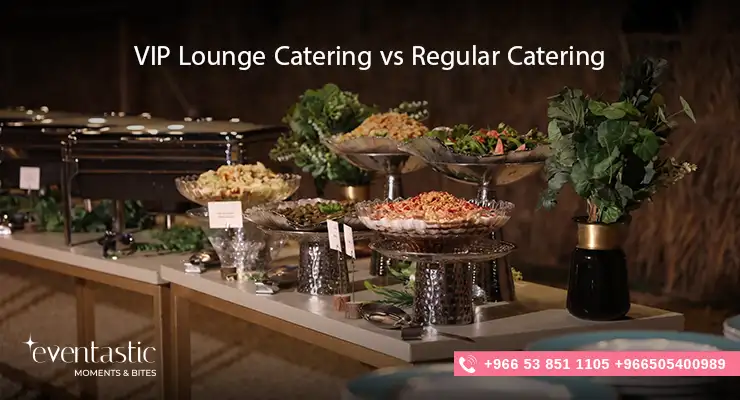
Catering can shape how guests experience an event long before they judge the venue itself. The menu, presentation, speed of service, and attention given to each guest all change significantly depending on the catering level selected.
Understanding VIP Lounge Catering vs Regular Catering helps you decide where premium service genuinely adds value and where standard catering may already meet your needs. The differences become clearer when comparing menu quality, presentation, service, and cost, which we explore in detail below.
Defining VIP Lounge Catering vs Regular Catering
The difference between the two catering levels is not simply serving more expensive food. VIP hospitality creates a more personalized experience for selected guests, while regular catering focuses on efficiently serving the wider guest list.
What defines VIP lounge catering?
- Focuses on a smaller or specially designated guest group.
- Provides greater attention to individual hospitality requirements.
- Uses refined presentation suited to premium event spaces.
- Allows greater flexibility when selecting food and service elements.
- Prioritizes the overall guest experience alongside the menu itself.
What defines regular catering?
- Serves larger groups through a standardized service structure.
- Prioritizes efficient food preparation and distribution.
- Uses menus designed around the event’s general requirements.
- Keeps the presentation practical while maintaining a professional appearance.
- Offers an effective solution when personalization is not the priority.
Which events benefit from a VIP area?
- Corporate events hosting executives or important clients.
- Weddings with dedicated hospitality for selected guests.
- Official events receiving distinguished attendees.
- Private celebrations require a separate premium experience.
- Large events combining general hospitality with exclusive lounges.
Create a hospitality experience that reflects the importance of your guests with Eventastic, from food selection to presentation and service details. Contact us now via Facebook or WhatsApp.
VIP Lounges Setup with Premium Catering
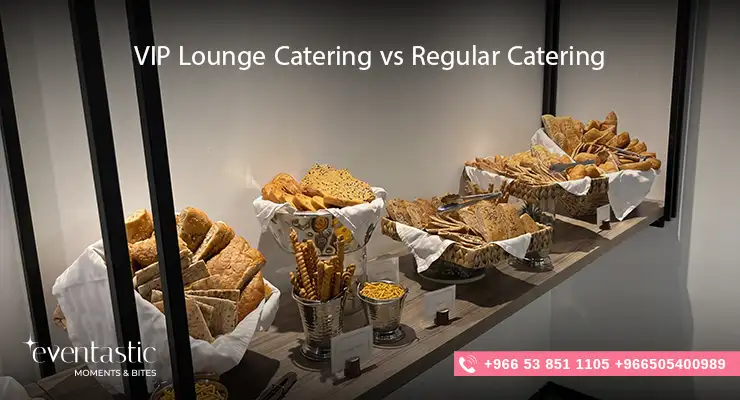
Differences in Menu Quality and Presentation
Menu selection is one of the clearest areas in a VIP catering comparison, as premium service places greater emphasis on customization, presentation, and the connection between food and the identity of the event.
Menu variety and customization
- Select dishes according to the profile of VIP guests.
- Balance main dishes, sides, desserts, and beverages.
- Adjust selections to match the event’s cultural identity.
- Consider luxury catering options for distinguished guest areas.
- Avoid excessive variety that does not improve the experience.
Food stations and Saudi cuisine
- Eventastic offers food stations inspired by Saudi regions.
- Guests can experience dishes representing different local traditions.
- Central-region options include Jareesh, Marqooq, and Qursan.
- Western-region selections include Mantu, Yaghmush, and Saleeg.
- Three dishes can be selected from each chosen station.
Presentation standards
- Coordinate serving pieces with the lounge’s overall design.
- Maintain sufficient space between individual food displays.
- Use presentation elements that complement rather than overwhelm dishes.
- Keep buffet areas organized throughout the event.
- Match presentation quality to the expectations of premium guests.
Live cooking as a premium element
- Adds interaction to the food experience.
- Gives selected dishes a stronger visual presence.
- Works well alongside themed food stations.
- Creates an additional hospitality feature within the lounge.
- Eventastic can provide live cooking as an additional service.
Best Display Systems for Live Cooking Shows
Service Level and Personal Attention in VIP Catering
Service creates another important distinction when assessing VIP Lounge Catering vs Regular Catering, because premium hospitality typically requires closer attention to timing, table readiness, guest comfort, and individual requests.
Guest-to-server attention
- Plan staffing according to the size of the VIP lounge.
- Reduce unnecessary waiting during food and beverage service.
- Keep staff available without interrupting conversations.
- Respond quickly to individual guest requirements.
- Maintain consistent service throughout the event.
Table service and hospitality details
- Arrange dining tools before guests enter the lounge.
- Keep tables organized throughout the hospitality period.
- Replace serving items when necessary without disruption.
- Coordinate service timing with the event program.
- Eventastic can provide waitstaff as an additional service.
Additional service options
- Tables and chairs can be provided when required.
- Plates and cutlery are available as additional options.
- Traditional table decoration can support themed events.
- Live cooking can be incorporated into the experience.
- Livestock can also be arranged according to event requirements.
Building a complete premium experience
- Coordinate food with the visual identity of the lounge.
- Match service style to the formality of the occasion.
- Understand premium vs standard catering before choosing extras.
- Keep movement between seating and buffet areas comfortable.
- Treat food, décor, and service as one connected experience.
How to Plan Stage and Backdrop Setup for Catering Events
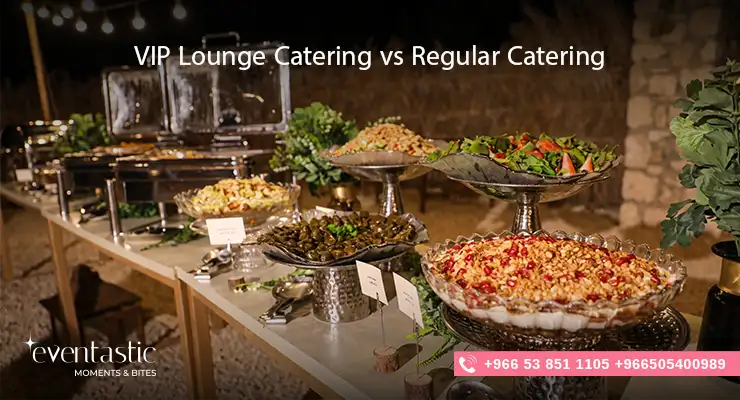
Cost Differences Between VIP and Regular Catering
The VIP lounge catering cost is shaped by the services included rather than a single fixed premium. Personalized menus, additional staff, live cooking, table arrangements, and decorative requirements can all influence the final quotation.
What increases VIP catering costs?
- Greater menu customization can affect the final quotation.
- Additional service staff may increase overall costs.
- Live cooking adds another service component.
- Tables, chairs, and dining tools can be added when required.
- Specialized décor may change the final package.
What keeps regular catering more economical?
- Standardized menus simplify preparation and service.
- Fewer personalized elements reduce additional requirements.
- Larger-scale buffet service can streamline staffing.
- A simpler presentation requires fewer decorative elements.
- The focus remains on efficiently serving the general guest list.
Comparing value rather than price alone
- Consider the importance and expectations of your guests.
- Assess how long the hospitality service will be required.
- Decide which premium elements guests will actually experience.
- Prioritize food quality and service before decorative extras.
- Evaluate VIP Lounge Catering vs Regular Catering according to actual value.
Can both levels work within one budget?
- Reserve premium hospitality for a designated lounge.
- Use regular catering for the wider event audience.
- Keep a consistent food quality standard across both areas.
- Differentiate the VIP experience through service and presentation.
- Allocate the budget according to guest priorities.
Stage and Backdrop Setup vs Live Cooking Station
Eventastic’s Guide to Choosing the Right Catering Level
Choosing between eventastic catering tiers should begin with the type of event and guest expectations rather than simply selecting the most expensive package. The right balance places premium hospitality where it delivers the greatest value.
Start with your guest profile
- Identify whether the event includes VIP attendees.
- Estimate the number of guests requiring premium hospitality.
- Consider cultural and dietary expectations.
- Determine the level of privacy required.
- Match the catering approach to the event’s formality.
Choose the right food experience
- Build selections around the event’s identity.
- Add regional Saudi stations when they complement the occasion.
- Choose three dishes from each selected regional station.
- Consider live cooking when interaction adds value.
- Eventastic’s food stations have a minimum of 50 guests.
Select only the services you need
- Add tables and chairs according to venue requirements.
- Include plates and cutlery where necessary.
- Choose traditional table décor for suitable event themes.
- Add waitstaff according to the expected service level.
- Combine individual options around the needs of the occasion.
Match premium elements to your priorities
- Invest more in areas guests directly experience.
- Keep the menu balanced rather than unnecessarily extensive.
- Select luxury catering options according to guest expectations.
- Adjust staffing according to guest numbers.
- Review the full VIP catering comparison before finalizing your choice.
A clear understanding of VIP Lounge Catering vs Regular Catering makes it easier to invest in the details your guests will genuinely notice. Eventastic can coordinate the food stations, presentation, and service around your event priorities. Contact us now via Facebook or WhatsApp.
How to Match Stage Decor with Your Catering Table
FAQs about VIP Lounge Catering vs Regular Catering
What's the main difference between VIP and regular catering?
VIP catering provides greater personalization, refined presentation, and closer guest attention, while regular catering focuses on efficient professional service for the wider event audience.
Is VIP lounge catering worth the extra cost?
It can be, especially for distinguished guests requiring a more personalized experience. The final VIP lounge catering cost depends on the selected menu, service elements, and hospitality requirements.
Can I mix VIP and regular catering at the same event?
Yes. Eventastic can combine different hospitality levels at one event, making premium vs standard catering practical when selected guests require a dedicated experience while the wider audience receives regular catering.